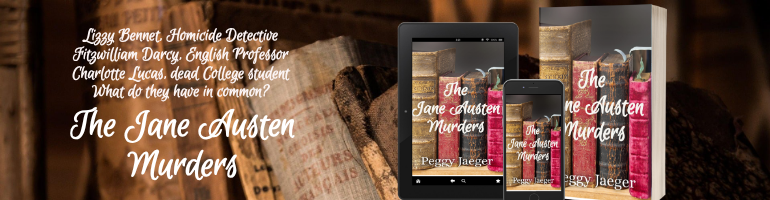
Here’s my entry. Drop by and give it a read. Leave a comment if you like it.
The invasion of the edits….
I have been up to my eyebrows in my first professional edits for the past few days, so I have not been able to blog much. Oh, who am I kidding: I haven’t had a moment to pee, much less blog!
I want to get these done correctly, quickly and accurately, so to the exclusion of housework, laundry and grocery shopping – the milk for breakfast didn’t taste so great – I have been diligently editing. Page after page. Paragraph after paragraph.
Thankfully, I didn’t have to change any of the plot or story line. Just tweak some tenses, kill some commas, and omit some superfluous phrasing.
Ah, the pleasures of having a novel in pre-production.
Release date will be forthcoming, so stay tuned.
Filed under Author, Contemporary Romance, Editors, MacQuire Women, Romance, Romance Books, Skater's Waltz, Strong Women
Edits here. Get ‘ya edits…
You know that feeling when you get your first professional edits back from your publisher and they’re not nearly as bad as you thought they were going to be?
Yeah! That’s me. Last night I finally received my first round of edits back from my publisher and, with a shaking hand and a quivering stomach, I opened the file and prepared myself for an onslaught of changes.
PSYCHE! There were pages and pages with no corrections or changes at all. The pages that had suggestions and corrections were all valid and easily done.
I am so stoked!!!
Off to edit land today. Oh joy, oh bliss! No, really. I AM joyous and I AM blissful about this.
Filed under Editors
Script writing vs. Novel writing…
At my New Hampshire Romance Writers of America meeting this month, guest speaker Dana Biscotti Myskowski gave a lecture titled Romancing the Script. Dana is a professional script writer, in addition to being a teacher of film and film studies, and she gave our group a number of insights into writing scripts, how to get them produced, and the pitfalls and turmoils of being a script writer.
Those pitfalls and turmoils sounded a lot like the same ones fiction writers have.
You’ve got this great script ( novel ) that you want to get made into a film ( published ). In order to do that you need someone willing to read it ( agent/editor ), produce it ( publisher ), market it and promote it. You need to get the right actors ( characters) into the right scenery ( setting) and develop a worthy plot that people will want to pay to go see – along the same lines that they pay to buy your book.
You usually don’t get paid until the screenplay is optioned, green lit, and then produced, much like the way you don’t get royalties until after the book is sold, and if you’re lucky enough, to get a paid advance prior to publication.
You pour your heart and soul into your script ( novel ) and most of the time it goes nowhere but to live on your laptop.
The two really are very similar.
They’re similar in concept and construct as well. You need plot, settings, dialogue, characters, and secondary characters in both.
The major difference – in my opinion – seems to be in the development aspect. In a script you’ve got roughly 120 pages to get the story told, the characters set, and the action moving from page one. Every scene tells a story and advances the plot. ( Okay, that happens in books, too.) But in the novel, the writer has much more page time to develop the characters, give that internal dialogue a voice, and get into the character’s head so that the reader knows what they are thinking and going through on an internal level.
A film is visual. The words of the script are in place to give you a picture – a real one – of what is happening. It is an external medium.You don’t leave it to the film watcher’s imagination to figure out what is happening, you show them. In a book, you use your words to paint that picture you want to give the reader. This is more an internal medium and you do – to some extent -rely on the reader’s imagination for them to “see” the word pictures you are showing them.
Whether you write scripts, novels, scripts based on novels, or anything else, the most important thing to remember with all of this is that : you are writing. You are doing something you love, something that gives you unlimited pleasure. And hopefully, something you can share with another that will also give that person the same pleasure.
Writing: it’s a good thing.
Filed under Characters, Dialogue
Love Unifies All…
“All you need is love…..” Paul McCartney
Every year on this date we are reminded of what hate can do, in the world, and to the world. News pundits broadcast about how hate is ruling certain people, religions, and areas of the world, infiltrating into our freedoms, making us feel unsafe, unwanted, and basically unloved as a people. Hatred, they warn us, is the common unifier in people who would wish our annihilation and destruction. A hatred so strong and burning inside so many, it may ultimately be our undoing as a species.
I choose not to listen to them for one reason and one reason alone. I truly believe – believe with every ounce of my soul – that LOVE is the strongest unifier, not hatred.
You can call me naive, accuse me of being simpleminded, even deride me for the thought. But I believe – no – I know – love is the most important aspect of our lives.
That’s all I have to say.
Filed under love, Romance, Romance Books, Strong Women
Location, Location, Location. It’s not just about Real Estate
We’ve covered plot driven books, and character driven novels. But what, exactly, is a setting driven novel? It almost sounds wrong when you say it out loud, as if the words don’t make much sense put together. Setting driven novel. All novels have a setting don’t they? They don’t occur in a vacuum, but in a place. Or more than one. But a setting driven novel?
I’ll probably take some heat for this along the line, but I can think of several novels with their setting as the main imeptus of the story. Sure, there are characters in it, and a plot or two along the pages, but the book was set – or placed – in this particular area to tell the story from that location and that location alone.
James Michener, for one author, was a prolific writer who used the settings of his novels as major roadworks. Hawaii, Chesapeake, Alaska, Iberia, are just a few of the titles of his novels. Yes, these books were sweeping family sagas that told generational tales, but where they occurred was a huge factor in how the story was told.
James Lee Burke, Pat Conroy and Annie Proulx are authors who use their settings to weave out their story lines. You can’t really image the Prince of Tides taking place in any other setting than the South, can you? Or The Shipping News taking place anywhere else but the Newfoundland coast?
All these authors know the value of having the proper setting to tell their tales.
Now, the argument I can feel forming is this one: Yes, these are books with setting as a major factor in them, but they are really not about the South, or Hawaii, or any of those places. They are stories about the people in the books.
Well…yes. But… imagine if Tom Wingo in the Prince of Tides had come to New York to see his sister from, say, Seattle. Would he have been the same person? Would his background – his deep southern background, in which he was stepped in traditions and culture indicative of that place – have proven to be such a driving force in the book with regards to his actions, non-actions, and how he handled his sister’s most recent suicide attempt?
This is a topic that requires a lot of thinking on the writer’s part. I can imagine that all of the characters in these novels were shaped and formed BECAUSE of and DESPITE where they are from. I could easily write a story about apple pickers in the Northeast. But would The Cider House Rules have been such an effective book if it had taken place in California? ( I don’t even know if they can grow apples in California, but you get my drift!)
Where you place your novel, where you set the characters into place, is a huge part of the story you want to tell.
Choose wisely and well.
Filed under Characters, New Hampshire
Two Masters, One Passion
My chapter of the Romance Writers Of America group is having a week long challenge on what I call “get the butts in the seats and write.” Every day we are encouraged to record our writing time in minutes and then submit them at the end of the day for a chapter and individual total. Published writer and NHRWA member Lisa Olech, author of Picture Me Naked is our motivator and head minute counter. This is the second summer I’ve participated in this challenge and I love it. It really inspires me to find time every day to write – anything and everything.
My actual challenge with this particular writing prompt is in the finding of spare time on the days I must go to my paying job. I’ve blogged about this time management issue for me before, but I can give actual numbers to the situation with this challenge.
This week, on three consecutive days, these were my totals : 150 minutes, 675 minutes, 180 minutes. Can you tell which day I didn’t work at my paying job?
This inconsistency has limited me in the amount of pages I can produce on a consistent basis and it can be frustrating. But I think I’ve found a very small light at the end of my tunnel. Because I can’t write the volume I want to write on a predictable time table, what I do write must be almost perfect the first time around. This time constraint forces me to write tight, write short, and write concise, three things every Editor wants their writers to do on a routine basis. This means that every word must count toward something valid in the scene I’m writing.
I’ve mentioned before that I’ve spent this summer re-reading some of the manuals I feel have helped me be a better writer. One of those books is How to Write Short by Roy Peter Clark. His thoughts and ideas on how to take paragraphs that are filled with superfluous words and shorten them down to the bare bones of sentences that convey the entire thought wanted, are priceless jewels for writers and is well worth the read.
I’ve used these writing short principles in my daily life as well as my writing life. I teach for a living – no, I’m not standing up in front of a classroom inspiring young minds. As part of my nursing/contact lens job I teach patients daily how to keep their eyes healthy and I instruct them in the proper care, wear, and cleaning of their ocular devices. I only get so much time per patient, so my instructional style has to be short, concise, and totally explanatory without needing to repeat, reiterate or revise what I’ve said in order for the patient to comprehend it without any confusion. For someone who likes to Tawk as much as I do, this has proven difficult in the past. Not any longer, thanks to Mr. Clark’s instructions.
Today I am not at my paying job but at home, typing away on the laptop. Today I will be able to devote many hours to my writing passion. The writing loft door is closed, the cellphone is on silent and I’ve disabled all my other social media for a while. It’s my time to write.
Today I hope to set a personal writing record for the challenge. We’ll see….
Filed under Characters, Editors
Are you driven by plot? And I don’t mean in the literal way…
Plot driven stories are just that: stories that are fundamentally about the…wait for it…Story.
The world is going to blow up unless the hero can save it and defeat the evil scientist. The largest diamond in the world has been stolen and the heroine needs to get it back. An island volcano in the Pacific Ocean is primed to blow and destroy half the world. Who or what can stop it? There’s a contagion on the rampage killing off half the world’s population.
All of these stories are plot driven. Something is going to happen ( or already has) and something needs to be done about it. There’s a lot of action, a lot of external maneuvering of the cast of characters, and hopefully a resolution of the problem in the end. There isn’t what you find in character driven stories – namely the deep internal conflicts, the emotional descriptions and the development of internal/external changes of the main characters.
The easiest way for me to remember the difference between character driven and plot driven stories is this way: In character driven stories, the people ( characters ) change. In plot driven stories the outcomes change, such as, potential earth destruction is now world peace.
Okay, that example was a little corny, but appropriate for this discussion.
In romance, plot driven books are usually the old standard lines, called tropes. Tropes are familiar or recurrent themes in stories. For romances, some – but not all – include: Marriage of convenience, a surprise baby, damsel in distress, opposites attract, love triangles. Writer Romy Sommer did a great piece on listing romance tropes in an article from 2012, that you can read by clicking on the link with her name. Suffice it to say that any number of tropes can be categorized as being plot driven. So even in romance, plot can be the motivator for the story.
Before I wrote romance novels I wrote mystery and suspense. These books were totally plot driven. I would come up with the idea first and then get my characters to join in the fun. I always had to keep the ultimate goal in the forefront of my brain, though, because it was too easy to start slipping in the emotions and desires of the characters. I needed to save the world, not the individual characters! Once I made the switch to romantic fiction, I was able to do what I loved doing and wish I could have done with the other books: delve into the characters.
Plot drive books have a lot of action. They need to because SOMETHING needs to propel the book forward and keep you turning the pages. Action adventure movies are typically plot driven. Not a great deal of time or effort is put into developing the characters. Instead, the big money is spent on the special effects and the blowing up of things. By the way, I know that last sentence sounds a little snarky,but it’s not meant to be. I actually enjoy action adventure movies. I just don’t enjoy reading them as much as watching them.
So if you’re basically a plot driven writer, good for you! Keep that action flowing, save the universe and defeat the bad guys. Or, if you’re plot driven and you write romance, make that surprise baby REALLY a surprise – even to the mom! Save that damsel from the international jewel theft ring. Make those two opposite personalities have to marry to save the family business. Just don’t forget that the ultimate goal once you have written all that is for the happily ever after.
Filed under Characters
Mommy Guilt Versus Writer’s Guilt
As part of my membership in the New Hampshire Romance Writers of America chapter, I have met some fabulous women who also happen to be extraordinary writers. One of those wonderful women is guest blogging here today and I am beyond thrilled that she is. I met Mary Stone at my first meeting last year, while she was pregnant. Very pregnant! I was immediately taken with how friendly, open and smart she was and when we got to chatting we both discovered we were Nurses. Fast forward a few months and she has had her lovely baby, and is embarking on the road to publication with her first YA novel The Lotus Operandi. She’s blogging today about guilt – something all women and mother’s know about and can relate to. Here’s a quick blurb about her, and her website address. Take a minute and go visit her there – it will be well worth the visit!
Mary Stone, writer of YA sci-fi romance, has a BA in English from the University of Vermont and a BS in nursing from Simmons College. Her completed novel, The Lotus Operandi, is heavily influenced by her nursing education where she discovered that genetics, the insidious nature of microorganisms, and the fascinating and frightening reality of human disease have the makings of a fantastic plot. She is currently seeking representation and working on her next novel. Learn more about her at: http://www.marykstone.com/
I’ve been promising my friend and fellow author/RWA member Peggy Jaeger, a guest blog post for an inordinate amount of time. Admittedly, my own blog has been due for just as long. But every time I have a spare moment to sit down, my fingers inexplicably open the file for my new manuscript. Chapter 1 has been in-progress for a solid three months, despite the fact that the end has been plotted since day one. I just haven’t had time to finish it. The very thought of plot, however, reminds me that my writing to-do list includes the entire plot—because this same manuscript has been patiently waiting to be mapped (out of my head and onto paper). So maybe, I tell myself, today is not the day to finally finish that first chapter that I’m ridiculously excited about, but the day to finally map the book?
Now, invariably, as I’m deciding which to focus on, I look up from my screen in time to catch my seven-month-old perform some ingenious new maneuver. What ingenious maneuver, you ask? Well, to this first-time mom, ingeniousness comes in many forms. Pooping, for example, can be quite impressive. Burping has its flashes of brilliance. Removing lifesaver-colored rings from their plastic post. And then replacing them! There’s really no end.
Ok. So back to that first chapter. The very thought of working on a first chapter reminds me that I’m rewriting chapter 1 of the manuscript I’m currently querying. Which I quickly conclude takes precedence. Right? Right. Since my goal is to find representation and get published and the first manuscript, after all, is completed. And speaking of querying…I just rewrote my query letter AND edited my synopsis, and really, both need another look. Ok. (Again).
I close chapter 1 of the new book—which, by the way, I am convinced is the one that will garner agent requests and excite Pitch Wars mentors and catch the eye of a fantastic editor—and I switch back to my query. But that cute little man who has been squealing with delight at his own antics has just decided he’s hungry. Starved, apparently. So I close my computer, and this new momma is off and running.
Bottle. Burp. More bottle. Burp. Diaper change. If you have kids, you know the drill.
Back to the query. Read through. Ignore heart-warming baby laughter while painstakingly changing words and pulling commas and reinstating sentences that have been previously cut. More baby laughter. Wait…cutest baby in the world is not laughing arbitrarily, but looking directly at me and making intermittent communicative grunts. I ponder the situation. The last three days were work days, so today NEEDS to be a designated writing day. BUT, baby was in daycare for three consecutive work days and clearly needs some interactive time with Momma.
Close computer. Scoop up baby. Happiness ensues.
Now. As you might surmise, this scenario repeats itself with one day melding into the next. Throw in some Twitter time. Balance it with ear infections that call for a surge of kisses and cuddle time. Add a healthy dose of researching agents. Follow it up with teething and commensurate consolation. Enter a contest. Lull baby to sleep or read picture book or begin teaching new skill. Rewrite the query—AGAIN. Have an impromptu photo session…
They say you should write every day for a multitude of reasons. Before the baby, I was putting in 12-hour writing days on my days off.
They also say that in the blink of an eye your baby is a teenager, a young adult, a parent. I can’t tell you how many people have wistfully advised me to enjoy every moment.
So yes, that query is addressed to my dream agent. It will be sent pending revision of chapter 1. The synopsis is done. I think. The new manuscript is waiting. I keep reminding myself if I set small goals then 8 months from now I’ll have a first draft instead of a mountain of guilt about what could have been.
The mommy guilt? With scores of people remarking how happy my baby is, I think I can scrap it.
As for the writer’s guilt? If you’re reading this blog post, then I can scrap that, too. At least for a day or two.
Peggy here: wasn’t this a fabulous piece? And sooooo relatable – especially to us moms who suffer or have suffered from that guilt everyday about whether to devote time to our writing WIPs or our human WIPs ( kids!). If you feel the same, have a comment, or even a tip on how to balance this crazy writing/family lifestyle, drop me a line and/or visit Mary at her website.
Filed under Uncategorized
 Peggy Jaeger, Author